Pepperstreet 9
In my wild years, when I was still a member of the public library and lived in a student house. Pepperstreet 9. Sometimes I still think back to that time.
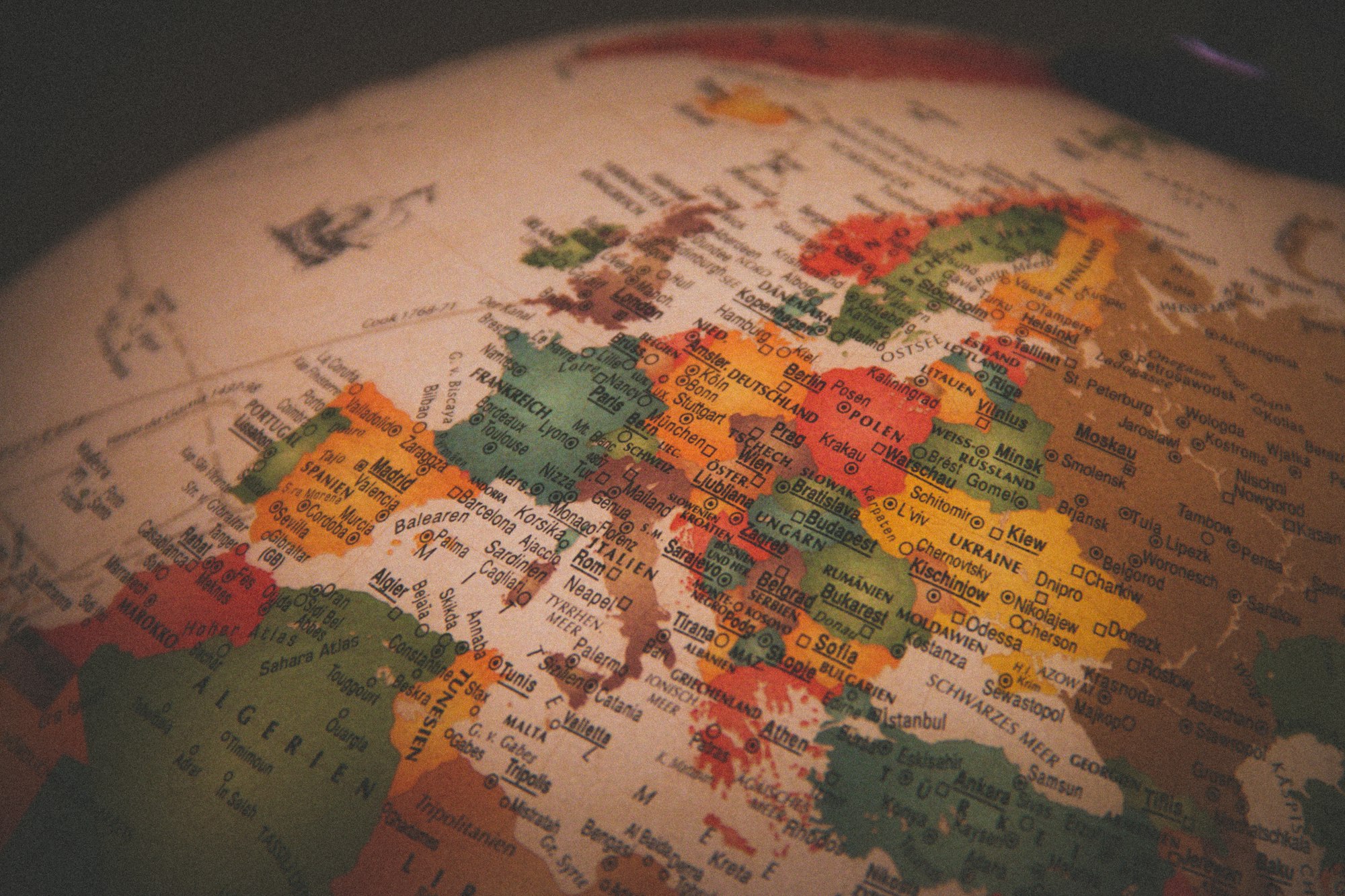
For example, when I look at Europe with that thought in mind. Then Europe is that student house where 27 people live together, all have their own keys, all think the thermostat is set wrong, and yet are surprised every month that the energy bill is high. We have a shared living room (the internal market), a shared basement (the bureaucracy), and a neighbour who rings the doorbell every week to “help” with security—where “help” often means that he also wants to decide where the sofa should be placed.
And now there is an idea that is slowly shifting from ‘madness’ to ‘common sense with a headache’: Europe must become more independent. Not dependent on other countries. Think of the Big Tech discussion.
Sounds tough. Sounds logical. Also sounds like you're finally deciding to get your driving licence after ten years of riding on the back of someone else's bike.
There is a reason why dependence is so tempting: it feels efficient. You buy defence, energy, chips, raw materials, cloud, medicines and security as if they were just products. And they are—until it becomes political. And it always becomes political, because geopolitics is literally: people with power messing with your stuff.
Dependence is like borrowing an umbrella from someone you don't really trust. It's fine as long as it's dry. But as soon as it rains, that person says, ‘Of course you can use it... by the way, I do have a few conditions.’
Over the past few decades, Europe has developed a very mature version of adolescent behaviour:
- We want freedom, but preferably without the costs.
- We want security, but preferably someone else will take care of it.
- We want values, but we'd rather not deal with the consequences.
And then we're surprised when the world suddenly stops functioning like a neatly organised supermarket.
‘Strategic autonomy’ sounds like something your GP mumbles while measuring your blood pressure. But it really just means: take care of your own basic needs so that you can't be held hostage.
Not because you hate others. Not because you want to live in a bunker with tinned food. But because adulthood means that you:
- can heat your own home,
- can trust your own digital infrastructure,
- can make your own medicines,
- and take your own safety seriously.
A social democrat immediately sees the crux of the matter: autonomy is not a prestige project, but public security. It's about whether the nurse, the teacher, the lorry driver, the factory worker and the student will bear the brunt when the world shakes. Spoiler: they already do. Only without a plan.
In Europe, defence has long been treated like a fire hose: you hope you'll never need it, so you store it somewhere in the back of the shed under a broken bicycle and a box of “Christmas stuff” you haven't seen since 2009.
And then there's a fire.
Being independent does not mean “becoming militaristic”. It means credible deterrence so that you are not dependent on the whims of elections elsewhere. Because if your security depends on the mood in another parliament, then you are not an ally, you are a subscription.
But beware: defence without a social basis is also worthless. The lesson of social democracy is not “more muscle”, but collective protection with democratic control, decent working conditions and an industrial policy that does not turn into a bag of money for lobbyists in tailored suits.
So make it European, transparent, and with clear goals:
- joint procurement (less fragmentation),
- interoperability (equipment that works together),
- own production capacity (ammunition, systems, parts),
- cyber defence (because nowadays war starts in your router).
Energy is not just kilowatt hours. Energy is power. And Europe has thought for too long that you can neatly store moral values and physical dependencies in different drawers.
Being independent means diversifying and becoming more sustainable—not as a trendy hobby project, but as a security policy. Renewable energy, nuclear power where countries want it, storage, networks, efficiency, and above all: less vulnerability to a single supplier.
And this is where social democracy becomes important: the transition must be fair. If “independent Europe” means ordinary people footing the bill while big players rack up subsidies, you will not achieve autonomy, but resentment.
So:
- invest publicly in networks and storage,
- protect low and middle incomes from price shocks,
- ensure that jobs in industry and technology benefit (training, retraining, wage agreements).
Europe has a talent for doing two things at once:
- Making strict rules for tech companies.
- Meanwhile, let everything run on someone else's cloud, someone else's chips, someone else's platforms.
It's like following a strict diet, but only in someone else's restaurant where you're not allowed to see the kitchen.
Being independent does not mean building every app yourself. It means:
- not making critical infrastructure (government, healthcare, defence, energy) completely dependent,
- building your own chip and battery value chains where realistic,
- seriously supporting open standards and European alternatives,
- and linking digital rights to industrial clout.
Rules without capacity are moralism. Capacity without rules is predatory capitalism. Europe must be able to achieve that combination: power with morality, and preferably with a sound budgetary framework.
Europe is slow because it is democratic, multilingual, and designed to channel disputes into meetings rather than trenches. That is not perfect, but it is civilisation.
The trick is to be slow in procedure but quick in execution. That is only possible if you make agreements in advance:
- what is critical (energy, defence, medicines, data)?
- What do we do together and what do we do nationally?
- What capacity must be on the continent?
- Which dependencies do we accept and which do we not?
And above all: stop pretending that every joint step is “federalism” that immediately takes away your cheese and culture. Nobody wants your cheese. They want your hospital to keep running because the supply chain is in disarray.
An independent Europe is not “Europe against the rest”. It is Europe ceasing to childishly trust a world that has mature cynicism.
Nor is it a project for diplomats and defence ministers alone. It is a social contract:
- security without fear politics,
- energy without blackmail,
- industry without exploitation,
- technology without digital subjugation,
- and a welfare state that does not collapse at the first geopolitical gust of wind.
Europe does not need to become a superpower. Europe simply needs to finally do what every adult learns one day:
Ensure that your affairs are in order....